

TL;DR
- Tartar is hardened plaque that cannot be removed by brushing or flossing alone. Only a dentist can safely remove it.
- Dentists remove tartar using scaling, deep cleaning (scaling and root planing), and polishing.
- Black tartar, found below the gumline, requires deep cleaning for effective removal.
- Removing tartar prevents gum disease, cavities, and bad breath, and leaves your smile cleaner and brighter.
- Most patients need a professional cleaning every six months; those with a gum disease history may need one every three to four months.
- Daily brushing with fluoride toothpaste, flossing, antibacterial mouthwash, and staying hydrated all help slow tartar buildup between visits.
How to Remove Tartar From Teeth: What You Need to Know?
The only way to remove tartar from teeth is through professional dental treatment. Once plaque hardens into tartar (a process that can begin in as little as 24 to 72 hours), it bonds firmly to tooth enamel and cannot be brushed, flossed, or rinsed away at home. Dentists remove it using a combination of scaling, deep cleaning, and polishing, each targeting different areas and levels of buildup.
Understanding these procedures helps you know what to expect at your next cleaning and why regular dental visits are non-negotiable for healthy teeth and gums.
What is Tartar and Why Can’t You Remove It at Home?
Tartar, also called dental calculus, forms when plaque, a sticky bacterial film, is left on teeth long enough to absorb minerals from saliva and harden. At that point, it adheres so firmly to the tooth surface that no amount of brushing or flossing can dislodge it. Trying to scrape it off with sharp objects at home risks scratching your enamel and cutting your gums, potentially making things worse.
If left untreated, tartar irritates the gum tissue, triggers inflammation, and creates an environment where cavity-causing bacteria thrive. Over time, this leads to gingivitis, gum disease, persistent bad breath, and eventual tooth loss. Learning how to remove tartar from teeth safely with the help of a dental professional matters for your long-term oral health, not just your appearance.
Dentist-Approved Methods to Remove Tartar From Teeth
At Spring Creek Dental, Dr. Deeg and her team use a structured sequence of procedures to remove tartar safely and thoroughly from the visible tooth surface down to below the gumline. Here is how each step works.
1.Scaling
Scaling is the primary technique used to remove tartar from teeth. It clears buildup from the visible surfaces of the teeth as well as just beneath the gumline, where tartar commonly accumulates. Dentists perform scaling using one of two methods, or a combination of both:
Manual Scaling: The dentist uses precision hand instruments called scalers to physically clear tartar from tooth surfaces. This approach gives the clinician fine control, particularly in tight or irregularly shaped areas that are harder to reach.
Ultrasonic Scaling: A high-frequency vibrating tip breaks up tartar deposits, while a fine mist of water simultaneously flushes away loosened debris and keeps the instrument cool. This method is especially suited to patients with heavier buildup and is generally faster than manual scaling alone.
Both methods are safe and commonly used together within a single cleaning appointment to ensure complete tartar removal.
2. Deep Cleaning
When tartar has built up significantly below the gumline, or when a patient shows early or advanced signs of gum disease, a standard scaling appointment is not enough. In these cases, dentists recommend deep cleaning: a two-part procedure that combines scaling with root planing.
Root planing is a technique for smoothing the root surfaces of teeth, eliminating the rough patches where bacteria anchor themselves and plaque reforms most quickly. This is also the primary method used to remove black tartar from teeth. Black tartar, clinically known as subgingival calculus, forms below the gumline and takes on a dark color from blood byproducts and bacteria present in that environment. Because of its location, it cannot be reached with standard above-gumline scaling and requires the deeper access that root planing provides.
Depending on the extent of the buildup, deep cleaning may be completed in a single visit or spread across multiple appointments by quadrant of the mouth. Local anesthetic is typically used to ensure comfort throughout.
3. Polishing
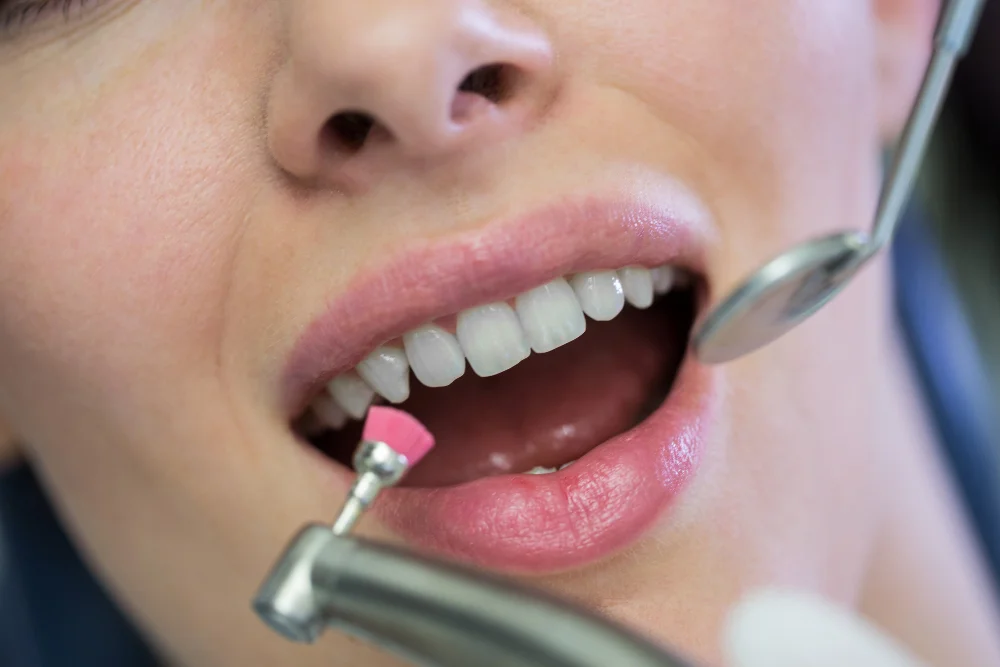
Once scaling and root planing are complete, the dentist polishes the tooth surfaces using a small rotary cup or brush with a mildly abrasive paste. Polishing removes minor surface staining and leaves teeth with a smooth finish that makes it harder for plaque to adhere, meaning tartar takes longer to reform after cleaning. While polishing noticeably brightens the appearance of your teeth, it is a health-focused procedure, not a whitening treatment.
Why Regular Tartar Removal is Important?
Tartar is more than a cosmetic issue. When it accumulates along and beneath the gumline, it triggers a chronic inflammatory response: the redness, swelling, and bleeding that signal gingivitis and, if left unaddressed, periodontitis. Removing tartar through routine general dentistry care stops this cycle before it can escalate.
Beyond protecting your gums, regular tartar removal reduces your cavity risk by eliminating the bacterial colonies that produce enamel-eroding acid. Patients consistently report fresher breath, healthier-looking gums, and a noticeably brighter smile following a cleaning, all direct results of clearing away tartar and the bacteria it harbors.
What to Expect After Tartar Removal?
Recovery after a professional cleaning is typically quick and straightforward. In the first one to three days, you may notice:
- Mild tooth sensitivity to hot or cold temperatures, particularly after a deep cleaning
- Slight gum soreness or minor bleeding that usually resolves within 24 to 48 hours
Longer term, most patients notice tangible improvements: smoother tooth surfaces that resist plaque adhesion, fresher breath as the bacterial sources of odor are eliminated, healthier gum tissue as inflammation subsides, and a brighter smile once surface staining is polished away. If sensitivity or discomfort persists beyond a week, contact your dental office.
How Often Should Tartar Be Professionally Removed?
For most healthy adults, a professional cleaning every six months is sufficient to prevent tartar from reaching problematic levels. Patients with a history of gum disease, consistently high plaque buildup, or other risk factors may benefit from more frequent visits, typically every three to four months.
If you are unsure how often you need professional cleanings, a dentist near Hudson can assess your oral health and recommend a schedule tailored to your specific needs.
How to Prevent Tartar Buildup Between Dental Visits?
Professional treatment is the only way to remove tartar once it has formed, but consistent daily habits can meaningfully slow the rate at which it accumulates. Dr. Deeg recommends the following practices to her patients:
- Brush at least twice a day with a soft-bristle toothbrush and fluoride toothpaste. Fluoride strengthens enamel and helps clear plaque before it has time to harden.
- Floss daily to remove plaque from between teeth and along the gumline: areas your toothbrush cannot effectively reach on its own.
- Use an antibacterial mouthwash to reduce the bacterial load in your mouth and slow new plaque formation between brushings.
- Drink plenty of water throughout the day to rinse away food particles and bacteria that contribute to plaque buildup.
- Limit sugary and starchy foods, which feed the bacteria responsible for plaque and, ultimately, tartar.
- Chew sugar-free gum regularly to stimulate saliva production, which naturally neutralizes acids and helps clean tooth surfaces.
- Keep your scheduled dental appointments. Even the most diligent home routine cannot reach every area where tartar forms. Professional cleanings close that gap.

Schedule Your Tartar Removal Today
After understanding how to remove tartar from teeth and what happens when it goes untreated, the next step is straightforward: book a professional cleaning with a team you can trust. At Spring Creek Dental, Dr. Melissa Deeg and her team provide thorough, gentle tartar removal and practical guidance to help you maintain a healthy smile long after you leave the chair.
Tartar not only affects how your teeth look, but it can also cause other problems, such as gum disease, tooth decay, and bad breath. Visit a professional dentist who performs regular dental cleanings to remove tartar from your teeth and keep your teeth and gums healthy. By acting on time, you can prevent future complications and maintain a healthy smile for years to come.
Call us at (715) 381-9710, or visit us at 422 2nd Street, Hudson, WI 54016, to schedule your cleaning.
FAQs
For most patients, tartar removal is not painful. Those with significant buildup or inflamed gums may experience mild discomfort during the procedure. Local anesthetic or topical numbing gel can be used to keep you comfortable throughout, so let your dentist know if you have concerns before the appointment begins.
A standard cleaning typically takes between 30 and 60 minutes. Deep cleaning appointments may take longer and are sometimes scheduled across multiple visits, depending on the extent of tartar below the gumline.
Yes, tartar will eventually reform if daily oral hygiene habits are not maintained. Consistent brushing, flossing, and keeping your scheduled dental cleanings are the most effective combination for managing buildup over the long term.
No. Tartar removal is a health-focused procedure that eliminates hardened plaque to protect your gums and teeth. Whitening is a cosmetic treatment for lightening the enamel color. A professional cleaning does remove surface staining, so teeth often look brighter afterwards, but that is a side benefit, not the primary goal.
No. Once plaque has hardened into tartar, mouthwash cannot dissolve or dislodge it. Antibacterial mouthwash is effective at reducing bacteria in the mouth and slowing new plaque formation, but it is not a substitute for professional removal.