
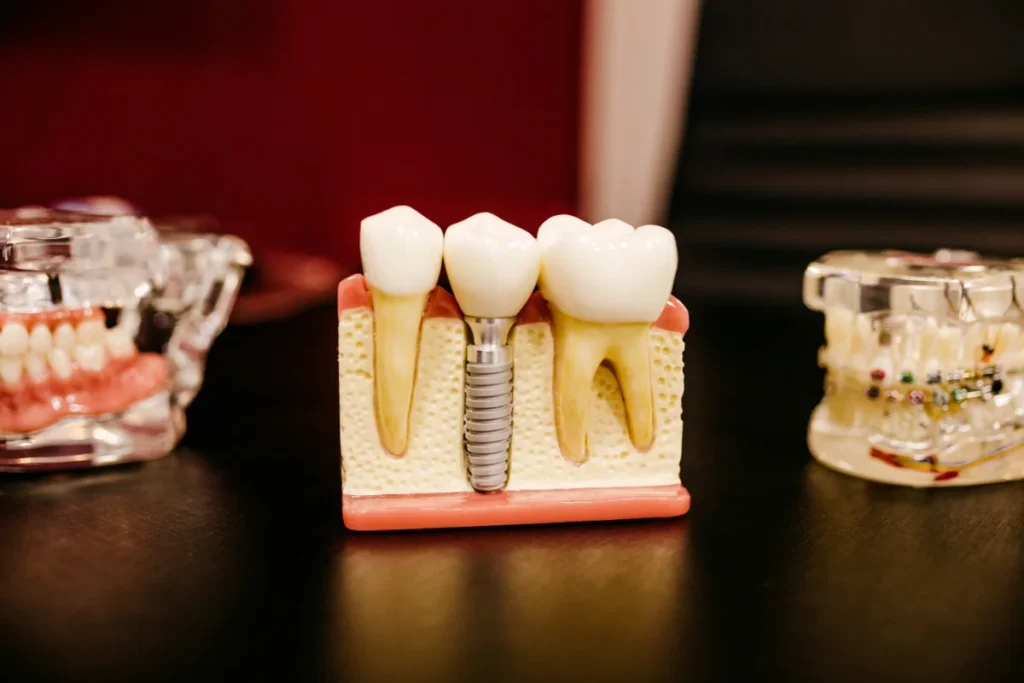
TL;DR
- Dental implants are posts placed in the jaw to replace missing tooth roots and support teeth or bridges.
- Main Types of Implants
- Endosteal: Placed into the jawbone
- Subperiosteal: Sit on top of the jawbone.
- Zygomatic: Attach to the cheekbone
- Based on Tooth Replacement
- Single-tooth implant: Replaces one tooth with a crown.
- Implant-supported bridge: Replaces a few teeth using two or more implants.
- Full-arch implants: Support a full set of teeth in one jaw.
- Based on Techniques and Systems
- All-on-4: Four implants support a full arch when bone is limited.
- All-on-6: Six implants provide extra stability for a full arch.
- Immediate load: Replacement teeth placed soon after surgery.
- Based on Materials
- Titanium: Strong, well-tolerated and bonds well with bone.
- Zirconia: Metal-free, white in color and ideal for cosmetic areas or metal sensitivity.
- Implants help you eat comfortably, look natural, protect your jawbone, preserve nearby teeth, feel secure, last many years and maintain your facial shape.
- Single implants cost $3,000–$6,000; full-arch $15,000–$30,000; full-mouth $30,000–$50,000+, depending on procedures, location and materials.
How Implant Types Differ and Why It Matters?
Dental implants are small posts placed in the jawbone to replace missing tooth roots. If you’ve been told you need a dental implant, the next thing your mind jumps to is probably which kind. That is often the point where things begin to feel a little confusing, since implants are not one-size-fits-all.
The option that works well for someone missing a single tooth may not be the right solution for someone who needs to replace several teeth or even a full arch. Your bone density, gum health, budget and long-term goals all play an important role in choosing the right approach.
The good news is that you do not have to sort through it alone. When you understand the different types of dental implants, what they are made for and how costs can vary, the decision becomes much clearer. Let’s take a closer look.
Main Types of Dental Implants
The most common implants fall into three groups, and each works a little differently depending on how many teeth you’re replacing and the shape of your jaw:
- Endosteal implants are the most common. These are placed directly into the jawbone and act like a strong, stable root for a single tooth or a bridge. They work well for most people who have healthy bone density and just need one or a few teeth replaced.
- Subperiosteal implants sit on top of the jawbone rather than going into it. They’re usually recommended when there isn’t enough bone for standard implants, or if someone can’t have a bone graft. The implant sits under the gum and holds the replacement tooth in place.
- Zygomatic implants are less common and are used in special cases. They attach to the cheekbone rather than the jaw. These are usually for people who have lost a lot of the upper jawbone and can’t get standard implants without extensive grafting.
Types of Dental Implants Based on Tooth Replacement
When planning dental implants, we start by looking at how many teeth are missing. Based on that, here are the options:
- Single-tooth implant: Used when you are missing just one tooth. An implant is placed in the gap and topped with a crown that blends in with the rest of your teeth. This keeps the nearby teeth from shifting and lets you chew normally again.
- Implant-supported bridge: Chosen when a few teeth in a row are missing. Instead of placing an implant for every tooth, two or more implants support a bridge. This gives good strength without putting pressure on healthy neighboring teeth.
- Full-arch implants: Recommended when most or all teeth in one jaw are missing. A small number of implants are placed to support a full set of fixed teeth. This option feels far more stable than removable dentures and makes everyday eating much easier.
Types of Dental Implants Based on Implant Techniques and Systems
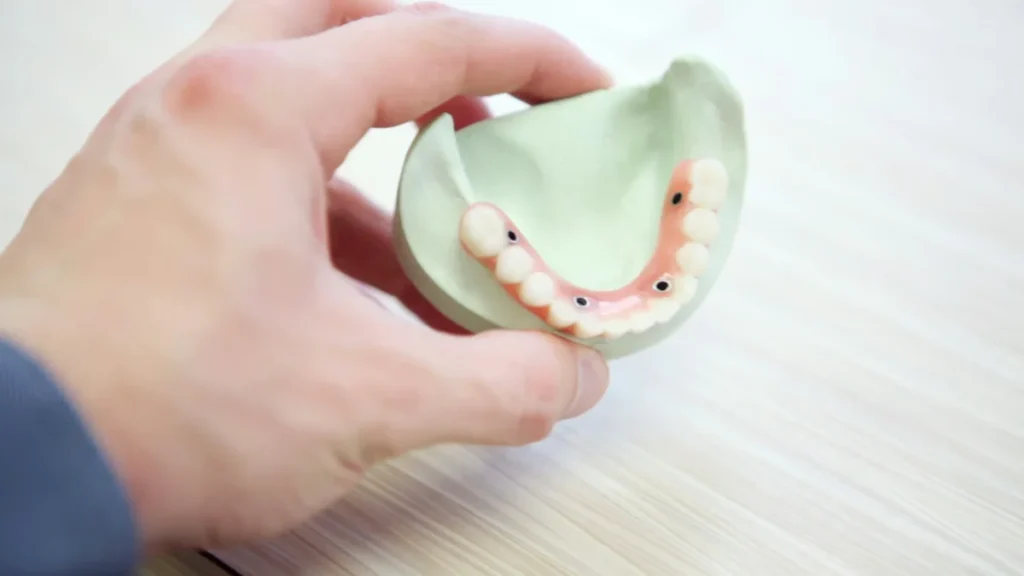
Apart from how many teeth are missing, we also look at how the implants are placed and supported. Certain techniques are chosen to suit bone strength, healing time and how quickly you want your teeth fixed:
- All-on-4 dental implants: We recommend this when most teeth in one jaw are missing, and the bone is limited. Four implants are placed in carefully planned positions to support a full set of fixed teeth.
- All-on-6 dental implants: Suggested when there is good bone support and extra stability is needed. Six implants are used to hold a full arch of teeth, which helps spread chewing pressure more evenly.
- Immediate load implants: Chosen when conditions allow teeth to be placed soon after the implant surgery. This reduces waiting time, but it is only suitable when the bone and bite are strong enough.
Types of Dental Implants Based on Materials
The material of the implant matters because it affects strength, comfort and how well the implant settles into the jaw over time. We usually choose from these materials based on your oral health and personal preferences:
- Titanium implants: These are the most commonly used. Titanium is strong, well-tolerated by the body and bonds well with the jawbone, making it suitable for most patients.
- Zirconia implants: This option is metal-free and often chosen for cosmetic reasons or metal sensitivity. Zirconia implants are white in color and work well in visible areas of the mouth.
What are Some Common Uses of Dental Implants?
At Spring Creek Dental, we have seen how dental implants make a difference beyond appearance. Some of the main benefits patients experience include:
- Helps you eat comfortably: Dental implants are firmly fixed in the jaw, so you can chew food properly without pain or fear of the tooth moving.
- Looks like a natural tooth: The replacement tooth is made to match the shape and color of your natural teeth, so it blends in easily.
- Keeps the jawbone healthy: When a tooth is missing, the jawbone can weaken over time. An implant helps keep the bone active and strong.
- Does not damage nearby teeth: Unlike bridges, implants do not rely on surrounding teeth for support, which helps keep neighboring teeth healthy and intact.
- Feels stable and secure: Because implants are fixed in place, they feel more like natural teeth than removable options.
- Can last for many years: With good oral care and regular dental visits, dental implants can even last a lifetime.
- Helps maintain your face shape: By supporting the jawbone, implants help prevent changes in facial appearance after tooth loss.
How Much Do Dental Implants Cost?
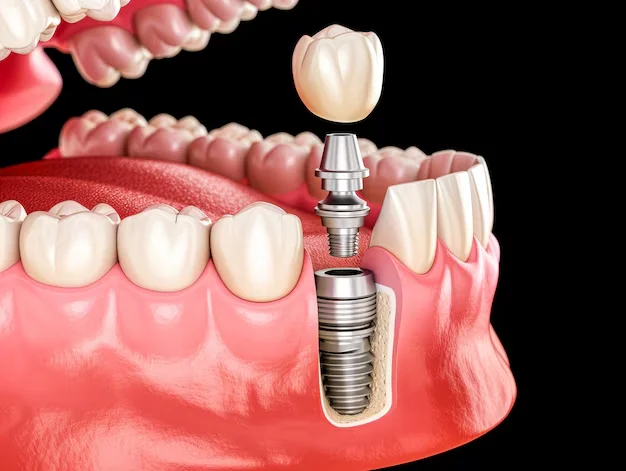
A single dental implant usually costs between $3,000 and $6,000. This figure commonly covers the implant placed in the bone, the connecting piece and the final crown you see when you smile.
If you are considering full-arch options, such as an All-on-4, costs are often in the range of $15,000 to $30,000 per arch. Full-mouth restoration can go higher, often $30,000 to $50,000 or more, depending on what is required.
The final cost varies from person to person. Factors include where the clinic is located, the experience of the dental specialist, the materials used and whether additional procedures such as bone grafting or extractions are needed before placing the implant.
The Bottom Line
Dental implants can make a real difference to everyday life, whether that is eating comfortably, speaking clearly or feeling more confident about your smile. With different types of dental implants available, treatment can be planned to suit your jaw and what feels right for you.
At Spring Creek Dental, we take the time to explain your options and answer your questions honestly. If you are searching for reliable dental offices in Hudson, WI, our team is here to help you understand which type of dental implant is a good fit for you.
Schedule a visit with us to talk through your concerns and take the next step towards a healthier, more comfortable smile.
Call: 7153819710
Visit: 422 2nd St, Hudson, WI 54016, United States
FAQs
Yes. When planned well and placed by an experienced dentist, dental implants are a safe and widely used option for replacing missing teeth.
It depends on how many teeth are missing and how strong your jawbone is. Your dentist decides this after an exam and scans.
For many people, yes. Implants stay fixed in place and feel more natural when eating or speaking. They also help support the jawbone, which dentures cannot do. That said, dentures may still be suitable in certain situations. The best option depends on your comfort, health and budget.
Bone loss can limit where and how implants are placed. If the jawbone is not thick or strong enough, your dentist may recommend alternatives like subperiosteal implants, zygomatic implants or bone grafting to provide a stable foundation for the implant.
With good oral hygiene and regular dental checkups, implants can last around 10 to 30 years, or even a lifetime.