
Key Takeaways
- A root canal can save a natural tooth when enough healthy structure remains to restore it.
- A dental implant replaces a tooth that is missing or cannot be predictably saved.
- Root canals usually involve fewer treatment stages, while implants may take several months to complete.
- The right choice depends on the tooth’s condition, surrounding bone and gums, and your overall treatment needs.
- A treated tooth may still need an implant later if it cracks, becomes reinfected, or cannot be restored.
- Both options can provide long-term results with good oral hygiene and regular dental care.
Root Canal vs. Dental Implant: What Does Your Tooth Need?
Can your tooth be saved, or does it need to be replaced? That single question sits at the center of the root canal vs. dental implants decision, and it is the first thing we try to answer for patients at Spring Creek Dental.
Here is the short version. When enough healthy tooth remains, root canal treatment cleans out the infection and keeps your natural tooth in place. When the tooth is cracked below the gum line or too decayed to rebuild, a dental implant gives you a lasting replacement that works much like a natural tooth.
We have been helping local families make this choice since Dr. Melissa Deeg opened the practice in 2009. This guide follows the same approach. Read on to see how each treatment works and how we decide which one fits your tooth.
What Is a Root Canal?
Inside every tooth is a soft center called the pulp, which holds nerves and blood vessels. Deep decay, a crack, or an injury can let bacteria reach it. The usual result is a toothache that will not go away, sensitivity to hot or cold, or swelling near the gum.
During a root canal, we remove the infected pulp, clean and disinfect the inside of the tooth, and seal it. Most treated teeth then get a dental crown for protection. Root canals are part of the general dentistry care we offer in our Hudson office.
The success numbers are good. Nikita Ruparel, an endodontist at UT Health San Antonio, reports a success rate above 95% for stopping infection, relieving pain, and saving teeth. If the idea of the procedure makes you nervous, we also offer nitrous oxide to help you relax.
What Is a Dental Implant?
An implant is a small titanium post placed in the jawbone, where it fuses with the bone over time. A crown goes on top, so the new tooth looks and works like a natural one. Implants can also anchor bridges and dentures so they stay put while you eat and talk.
Two things we point out to patients:
- Neighboring teeth do not need to be ground down, which is often required for a traditional bridge.
- Implants help preserve the jawbone after a tooth is lost.
- Implants need healthy gums and enough bone to hold the post.
With good care, an implant can last a lifetime. A review of more than 13,000 implants at the Academy for Oral Implantology found a failure rate of about 3%.
Root Canal vs. Dental Implant: Key Differences
Here is how the two treatments compare:
| Aspect | Root canal | Dental implant |
| Goal | Save your natural tooth | Replace a tooth that is missing or cannot be saved |
| What happens | The inside of the tooth is cleaned and sealed | A titanium post is placed in the jaw, then a crown is added |
| Treatment time | Often one or two visits, plus a crown if needed | Several months (3 to 7), since the post needs time to fuse with bone |
| Natural tooth | Kept | Removed first if still in place |
When patients compare root canal vs. implant, the biggest gap is what happens to the tooth. A root canal keeps your own tooth, root, and all. An implant replaces it.
Cost is another piece of the dental implant vs. root canal question. A root canal usually costs less upfront, while an implant involves more steps and parts. We are in network with most major insurance plans and file claims on your behalf.
Root Canal or Implant: Which Is Better?
When patients ask whether a root canal or dental implant makes more sense, a root canal usually wins in these situations:
- Enough healthy tooth remains above the gum line to hold a crown.
- The infection is limited to the pulp, and the bone around the tooth is healthy.
- You would rather skip surgery and a longer healing period.
- You want to keep the natural feel of your own tooth.
An implant tends to make more sense when:
- The tooth has a crack that runs below the gum line.
- Too little healthy structure is left to support a crown.
- A previous root canal failed, or the infection keeps coming back.
- The tooth is already missing.
Can You Get an Implant After a Root Canal?
Yes. Having a root canal does not rule out an implant later. If a treated tooth cracks, gets reinfected, or loses too much structure, we can remove it and plan an implant. What matters most at that point is the health of your bones and gums.
How Your Dentist Decides Between a Root Canal and an Implant
So, should you get a root canal or implant? The honest answer is that an exam comes first. Here is what Dr. Deeg and our team look at:
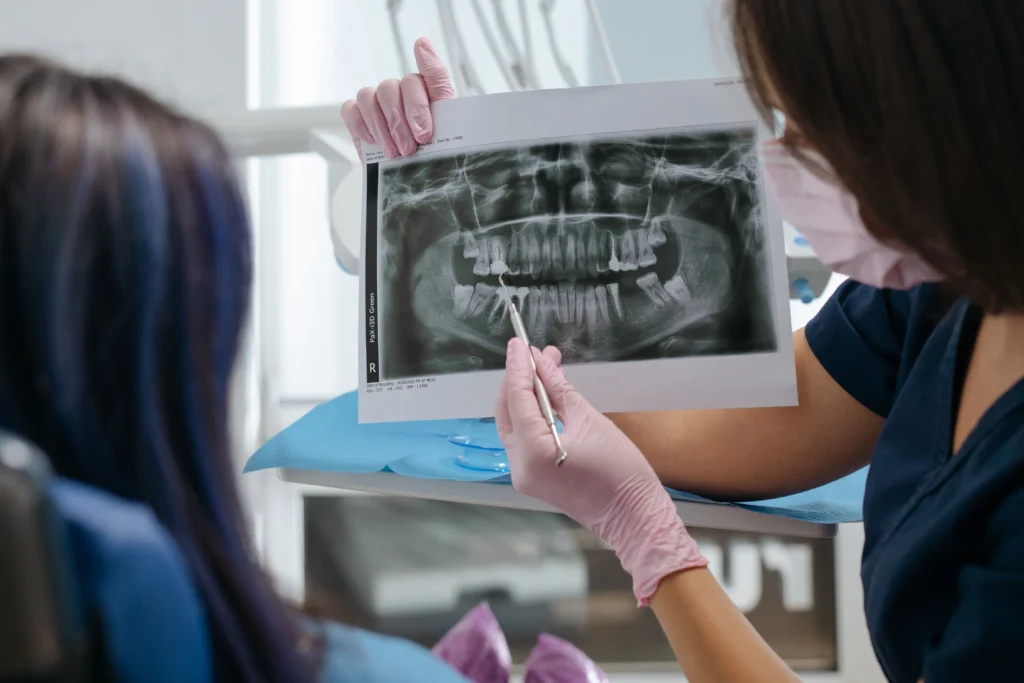
- X-rays to see the roots, the surrounding bone, and any infection
- A close check for cracks and for decay under the gum line
- The health of your gums and the bone that supports the tooth
- Your goals, budget, and timeline
The Bottom Line
Neither treatment wins in every case. If your tooth can be saved, a root canal is usually the better path. If it cannot, an implant gives you a lasting replacement. The root canal vs. dental implants choice depends on the condition of your tooth, not on which option is newer or more popular.
If you are in pain, please do not wait. You can reach out to Spring Creek Dental at (715) 381-9710 or visit us at 422 2nd Street in Hudson. We welcome patients from River Falls, Roberts, Somerset, New Richmond, Baldwin, Stillwater, Afton, and Lakeland, too.
If you are looking for root canal or dental implants in Hudson, our team is here to look at your tooth, answer your questions, and help you choose with confidence.
FAQs
Please come in for an exam either way. Pain can fade when the nerve inside the tooth dies, but the infection can stay behind and spread. A quick visit and X-ray will show whether the tooth can still be saved.
Implants need enough healthy bone and gum tissue to hold the post in place. Some patients need extra evaluation first, and for others, a bridge or a denture is the more comfortable fit.
With good care, a treated tooth can last a lifetime. Brushing, flossing, and regular checkups protect it, and a crown is often added to strengthen the tooth afterward. We decide on the crown case by case.
An implant can also last a lifetime with good care. The crown on top may wear down sooner than the post and need replacing at some point. Regular cleanings and healthy gums go a long way toward keeping an implant stable.